Measure a Coat Sleeve for Removable Fur Cuffs
Measure a coat sleeve at the position where the removable cuff is intended to sit, then compare that measurement with the cuff maker's stated internal fit guidance. Clarify whether the listing gives circumference, flat width or outer dimensions before making a comparison. Include the way the sleeve is worn and any glove overlap. Do not treat the fur's visible width, an elastic opening or a one-size label as a universal sleeve-fit measurement.
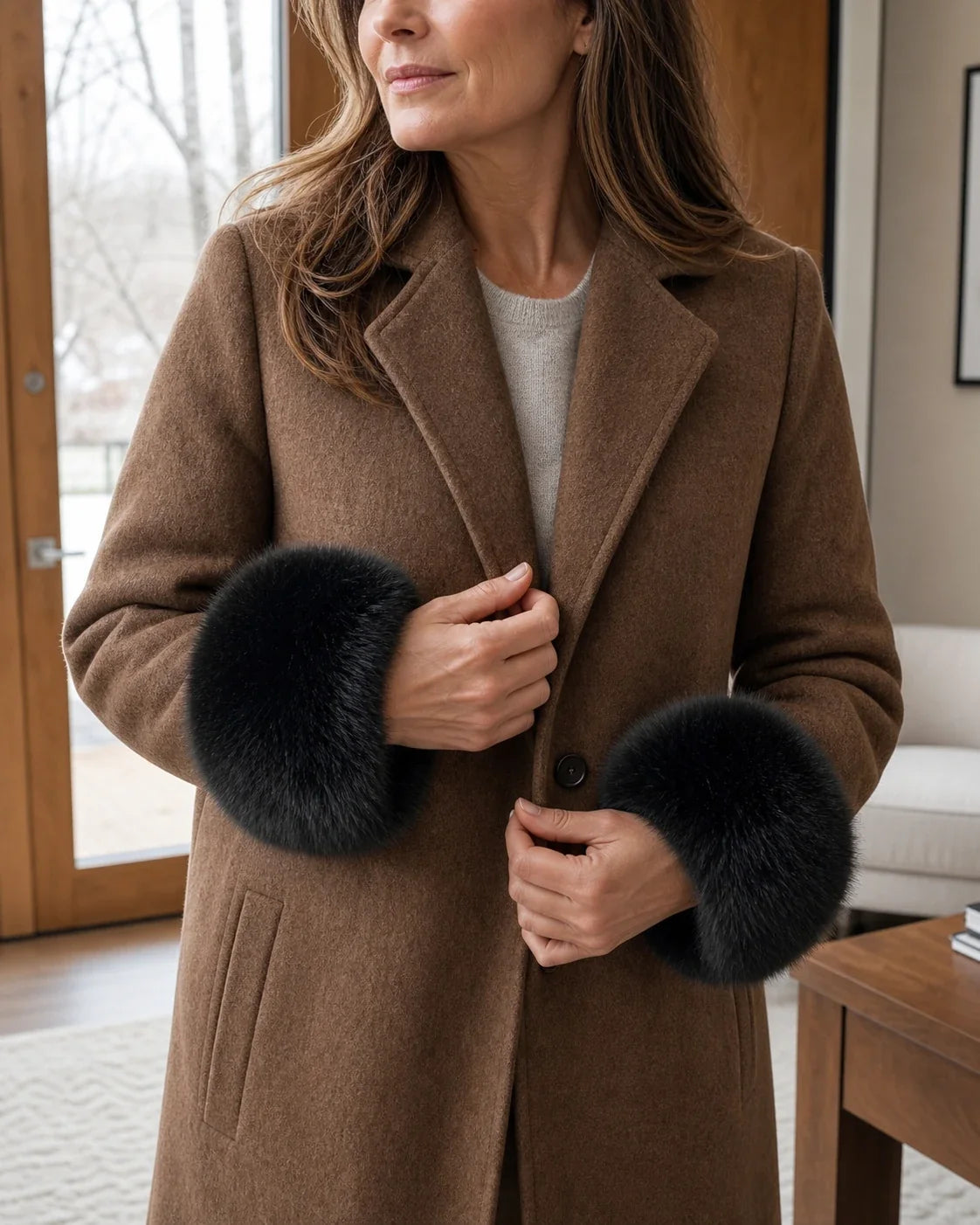
Measure a coat sleeve at the position where the removable cuff is intended to sit, then compare that measurement with the cuff maker's stated internal fit guidance. Clarify whether the listing gives circumference, flat width or outer dimensions before making a comparison. Include the way the sleeve is worn and any glove overlap. Do not treat the fur's visible width, an elastic opening or a one-size label as a universal sleeve-fit measurement.
Mark the intended position before using the tape
Put the coat on with the layer you normally wear beneath it. Let the arm rest naturally and identify where the cuff is intended to sit. The sleeve end is not always the same width as a point slightly farther up the arm, particularly on a tapered or flared design. A measurement is only useful if its location is clear.
Check for buttons, tabs, zips or a turned-back edge at that position. They may occupy space or interfere with the cuff's attachment. Do not measure as if those features disappear once the accessory is added. If the cuff would cover a fastening you need, consider another position only if the product is designed to work there.
Ask what the cuff dimension represents
A listing may give length and width without explaining whether those refer to the outside fur, the flat cuff body or an internal opening. Ask for that explanation before calculating. Doubling a flat figure does not necessarily produce a usable internal circumference, particularly when the measurement method and construction are unknown.
Use clear language in the question: I need to compare the opening with my coat sleeve; does this dimension describe the inside fit, and is it measured relaxed or in another stated condition? This is more useful than asking whether the cuff is big enough. It tells the seller which missing field would help you decide.
Take the sleeve measurement consistently
Follow any measuring method supplied for the cuff. If a circumference is requested, keep the flexible tape level around the intended sleeve position without compressing the worn layers. Record the number and unit together, then repeat the measurement after removing the tape. Check the same location on both sleeves if the coat's design or condition differs.
Do not combine an empty sleeve measurement with a worn-sleeve measurement as though they represent the same condition. Note how you took it. If the seller needs the coat laid flat instead, follow that request and label the measurement accordingly. Consistency is more valuable than producing a single number with no explanation of what it describes.
Keep wrist fit and sleeve fit separate
Some accessories sit around the wrist; others are intended to sit over part of the coat sleeve. Determine which arrangement applies before measuring. Your bare wrist circumference does not describe the outside of a layered sleeve. Equally, a cuff chosen to pass over a bulky coat may not rest as intended on the bare wrist.
If the product can be worn in more than one way, ask for the guidance for each arrangement. Do not assume that a flexible opening makes every position appropriate. Choose the use you actually want and compare the corresponding dimensions. This avoids buying a piece that technically passes over the hand but does not sit well where you need it.
Interpret elastic without testing it to the limit
An elastic opening is a construction feature, not an unlimited size range. Ask for the intended fit guidance and do not stretch the cuff forcefully to estimate its maximum. The relevant question is whether it can rest securely and comfortably in normal use, not how far the material can be pulled for a moment.
Our fox fur wrist cuffs are listed as a pair with flexible elastic openings. Their product information also lists outside dimensions, but those figures are not treated here as a complete internal sleeve-fit range. If you need to match a particular coat, request the opening information rather than assuming the visible size settles the question.
Add the glove only after the cuff position is clear
Put on the gloves you intend to use and check where their ends meet the cuff and sleeve. Bend the elbow, reach forward and lower the hand again. Notice whether the layers crowd the wrist or move each other. A successful static measurement still needs this practical compatibility check.
If the glove already has a substantial fur cuff, consider whether another removable cuff adds a useful effect or repeats the same volume. You may prefer one statement at the wrist and a simpler companion. That is a styling choice supported by a fitting, not a rule that every coat must use the same combination.
Compare the pair as a pair
Confirm whether the product is sold singly or as two cuffs. When trying them, look at both sleeves together and notice the intended placement. Do not demand perfectly identical hair direction from a natural-looking surface, but do check that you received the selected option and the described components.
If one side sits differently, investigate the coat sleeve, the placement and the cuff's condition before assuming a size mismatch. Take photographs that show the overall sleeves and the specific concern. This gives the seller enough context to distinguish a fit issue from a visual variation or an attachment problem.
Know when another design is the easier answer
If the fit only works by compressing a flared sleeve, hiding a needed fastening or stretching the cuff beyond its intended use, consider another pairing. The accessory should complement the coat, not require the coat to stop functioning as designed. A different cuff format or another sleeve shape may solve the issue more simply.
Do not add hidden pins, stitches or adhesive to rescue a poor fit without appropriate advice. Such changes can affect both objects and may complicate later care. If you are considering a permanent alteration, treat that as a separate decision rather than an automatic final step in choosing a removable accessory.
Keep the measurements for next time
Save the location, method, unit and coat identity with your notes. A simple record makes future comparisons easier and prevents you from using one coat's measurement for another. Keep the cuff's own care instructions alongside it, especially if the coat and accessory require separate handling.
Before the next season, check that the coat and cuff still sit as expected. Condition and the layers you wear can change the practical combination. You do not need to remeasure obsessively; you do need to notice when the original assumptions no longer describe the outfit you are wearing.
Frequently asked questions
Can I use the coat’s labelled clothing size?
Not as a substitute for the requested sleeve measurement. Sleeve shape and layers can differ within the same clothing size.
Is outer fur width the opening size?
No such relationship should be assumed. Ask which part was measured and how.
What if the listing has no internal fit range?
Request the missing information for the exact cuff. Do not force the fit or create a conversion from unrelated dimensions simply to complete the purchase.