What Knitted Fur Means: Construction, Stretch and Fit
Knitted fur describes a construction approach, not a separate animal material or a universal fit promise. Read which part is knitted, what fur is named, whether there is a separate lining and what measurements are supplied.
By Capricornus Living · Updated October 9, 2026
Knitted fur describes a construction approach, not a separate animal material or a universal fit promise. Read which part is knitted, what fur is named, whether there is a separate lining and what measurements are supplied. A flexible-looking surface does not establish a comfortable stretch range. Compare the complete accessory and its care instructions rather than treating the word knitted as proof that it behaves like an ordinary wool knit.
Knitted fur: Start with three separate questions
What is the material? How is it constructed? What shape does the finished accessory have? These questions are related, but none should replace the others. A product can identify Rex rabbit fur while describing a knitted shell and a mitten shape. Each piece of information contributes something different to the buying decision.
Saga Furs includes handknit among its published fur techniques. That confirms knitting is part of the craft vocabulary used with fur; it does not identify the process used for every accessory described as knitted. The current products in this guide are not claimed to use Saga materials, grading or a particular proprietary technique. Read the source.
If a description uses the word knitted without explaining the material, ask for the missing composition. If it names fur without explaining the structure, ask what the word means for the specific item. You do not need to become a maker to request an accurate description of what you are buying.
A useful description of stretch
When asking about a knitted accessory, distinguish a structure that can flex from a measured fit range. You could ask, “What dimensions describe this finished item at rest, and what fit guidance can you provide?” That question does not require the seller to promise that every knitted product behaves alike.
Use a real description rather than a mental picture
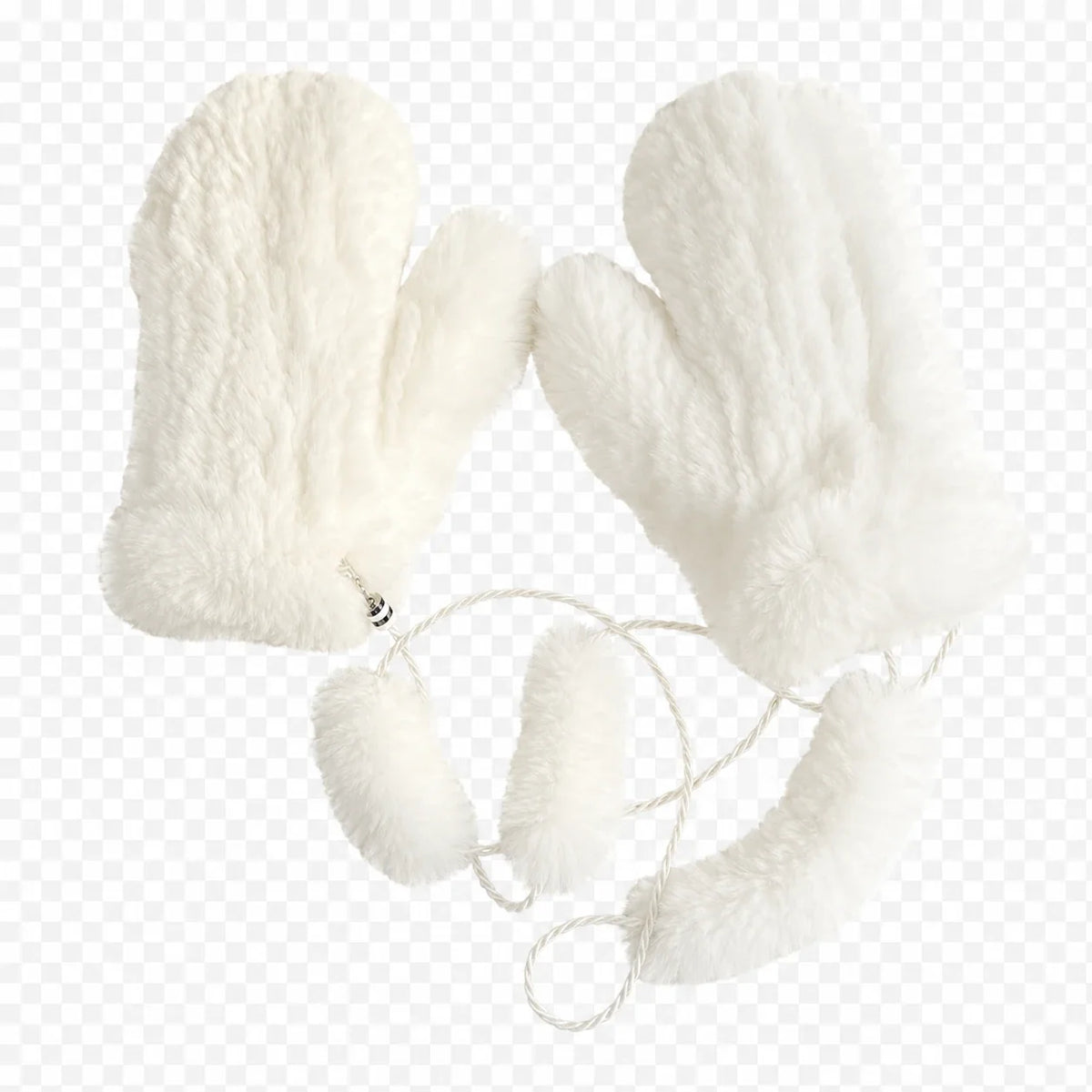
Our Rex rabbit knit mittens are described with a knitted fur shell, a soft lining and a keeper cord. The product is offered as one size with flexible stretch. The description does not specify the lining’s exact fiber or publish a measured stretch range. Keep those limits visible while comparing it with another piece.
The Rex rabbit fingerless mittens are described differently: a double-sided fur tube construction with flexible stretch, covering the wrist and lower palm while leaving the fingers exposed. A similar surface does not make the two products identical in construction or coverage. Do not add the knitted label to an item merely because it looks flexible.
These examples show why a short product name is only a starting point. Read the specifications, look at the opening and interior views, and note which component each statement describes. The lining and exterior can have different roles even when they are not easy to distinguish in a worn photograph.
Stretch is a question to investigate, not a size
A description of flexibility tells you that the structure can move; it does not tell you how the accessory will feel on every hand or wrist. Ask for relevant measurements and how they were taken. An unstretched opening, a laid-flat width and a circumference under tension are different measurements and should not be substituted for one another.
Try the intended fit gently if you can inspect the item in person. Check the position of the thumb, the space at the fingertips and the overlap with a coat sleeve for mittens. For a fingerless tube, check wrist and lower-palm placement. Stop if the piece needs force or constant adjustment to stay comfortable.
Do not expect repeated stretching to turn an uncertain fit into a guaranteed one. The product description does not establish a break-in allowance, a maximum stretch or a recovery test. If the needed fit information is absent, ask before ordering rather than turning the first wearing into an experiment.
Look at openings, edges and the inside
A full view explains the outline. An opening view helps show what you will put your hand through. A detail view can clarify visible surface structure. Use those images together instead of judging the entire product from a close-up that removes scale. An attractive texture is only one part of an accessory that must also be put on and removed.
If an interior view is missing, ask what is inside and whether the lining is separate. Do not infer that a fur exterior means a fur lining. The trim, lining and exterior guide explains those locations without turning an unspecified lining into a material claim.
Do not pull a lining away or expose hidden seams to investigate construction after delivery. Use accessible views and ask the seller for clarification. A product can be flexible in ordinary use while still having components that are not intended to be opened or altered by the wearer.
Compare movement in the finished shape
Think about the task you want to perform. A mitten encloses the fingers together; a fingerless format leaves them exposed. That difference remains important regardless of how flexible the fur surface appears. Do not let the word knitted distract from the basic coverage and movement trade-off.
Try ordinary actions relevant to your day: reaching for a card, holding a bag handle, opening a door or removing the accessory indoors. These are personal compatibility checks, not standardized performance tests. If a task requires taking the item off, decide whether that is acceptable for your routine.
The keeper cord on the knitted mitten example is a listed component, not a promise about every use situation. Read any instructions for it and consider how it fits your clothing. Do not treat a decorative or connecting element as a structural handle or make safety claims that the product description does not support.
Do not infer warmth from the construction word
A knitted description does not provide a temperature rating. Neither does a dense-looking photograph. The complete accessory, its fit, coverage and the conditions in which you use it would matter to any performance assessment. No numerical warmth test is supplied for the examples here.
Compare stated construction and intended use without converting them into a promise for extreme conditions. If you need a tested level of protection for a particular activity or environment, seek a product with relevant verified specifications. A lifestyle accessory guide is not a substitute for that requirement.
Likewise, do not assume a lining is a certain animal material because the outside is fur. The mitten page describes its lining as soft, but does not name the exact fiber. That is enough to identify a separate layer, not enough to claim a fur-lined interior.
Care for the complete object
Knitted fur should not be treated as ordinary washable knitwear by default. The featured mitten instructions prohibit machine washing and tumble drying, allow air drying away from direct heat after light dampness and recommend a professional natural-fur cleaner for deep cleaning. Follow those directions for the item rather than a routine learned from a wool sweater.
When storing it, avoid unnecessary compression and keep the pair together without forcing a fold or stretching the openings. Check the condition after wear and pause use if a seam, lining or surface changes. Do not repair a snag by pulling a visible strand as though you know how the structure is assembled.
If you need cleaning or repair, describe the product as a complete accessory with a knitted fur shell and separate lining where that is confirmed. Tell the provider which facts are missing. A useful service conversation begins with an accurate description, not with technical terms added to make the object sound more familiar.
Choose by the job, then by the surface
Use the gloves and mittens buying guide to decide the coverage and movement you need. Then compare the construction, fit information and care of individual products. That order keeps an attractive texture from becoming the only reason for a purchase.
The product cards below show two different handwear formats. They are not a controlled test of knitted versus non-knitted fur, and they do not establish a universal winner. One may suit your intended use, neither may fit, or you may need more information before choosing.
A well-understood accessory can become familiar over repeated wear without requiring you to guess what it is made of. Keep material, construction, fit and care as separate lines in your comparison, and the word knitted becomes useful information instead of a shortcut to conclusions.
Common questions
Does knitted fur mean faux fur?
No. It is a construction term, not sufficient material identification. Read the exact composition of the item.
Does a stretch-fit description replace measurements?
No. It does not establish a universal size range or pressure level. Ask for the relevant measurements and compare them with your intended use.
Compare the featured accessory formats

Genuine Rex Rabbit Fur Knit Mittens - Warm Lined Winter Gloves
Rex rabbit fur mittens with a knitted shell and separately described soft lining. The lining fiber is unspecified. Check hand fit and follow the item’s care directions.

Genuine Rex Rabbit Fur Fingerless Mittens - Double-Sided Fur
Double-sided Rex rabbit fur fingerless mittens in a flexible tube format. The fingers remain exposed; check the one-size fit without assuming an unstated stretch range.
Explore the related collection and check the selected option’s current details before ordering.
Sources and further reading
Product information checked October 9, 2026. Styling suggestions are editorial guidance, not a report of product testing. Follow the selected item’s care instructions.
- Genuine Rex Rabbit Fur Knit Mittens - Warm Lined Winter Gloves
- Genuine Rex Rabbit Fur Fingerless Mittens - Double-Sided Fur
- Saga Furs: Fur Techniques
Read the material-location guide · Explore our materials · Care and keeping
Explore the next specific question
Continue with the guide that matches your material, outfit or care decision.