Choose a Fur Trapper Hat by Crown, Earflaps and Coat Fit
Choose a fur trapper hat by checking the crown fit, the position of the earflaps and the way the hat meets your coat collar. Confirm which parts contain fur, what the crown and lining are made from and how any ties or fastenings are intended to work. Do not choose from the name alone: similar silhouettes can have different materials, fit ranges and wearing arrangements. Try the complete winter outfit before deciding.
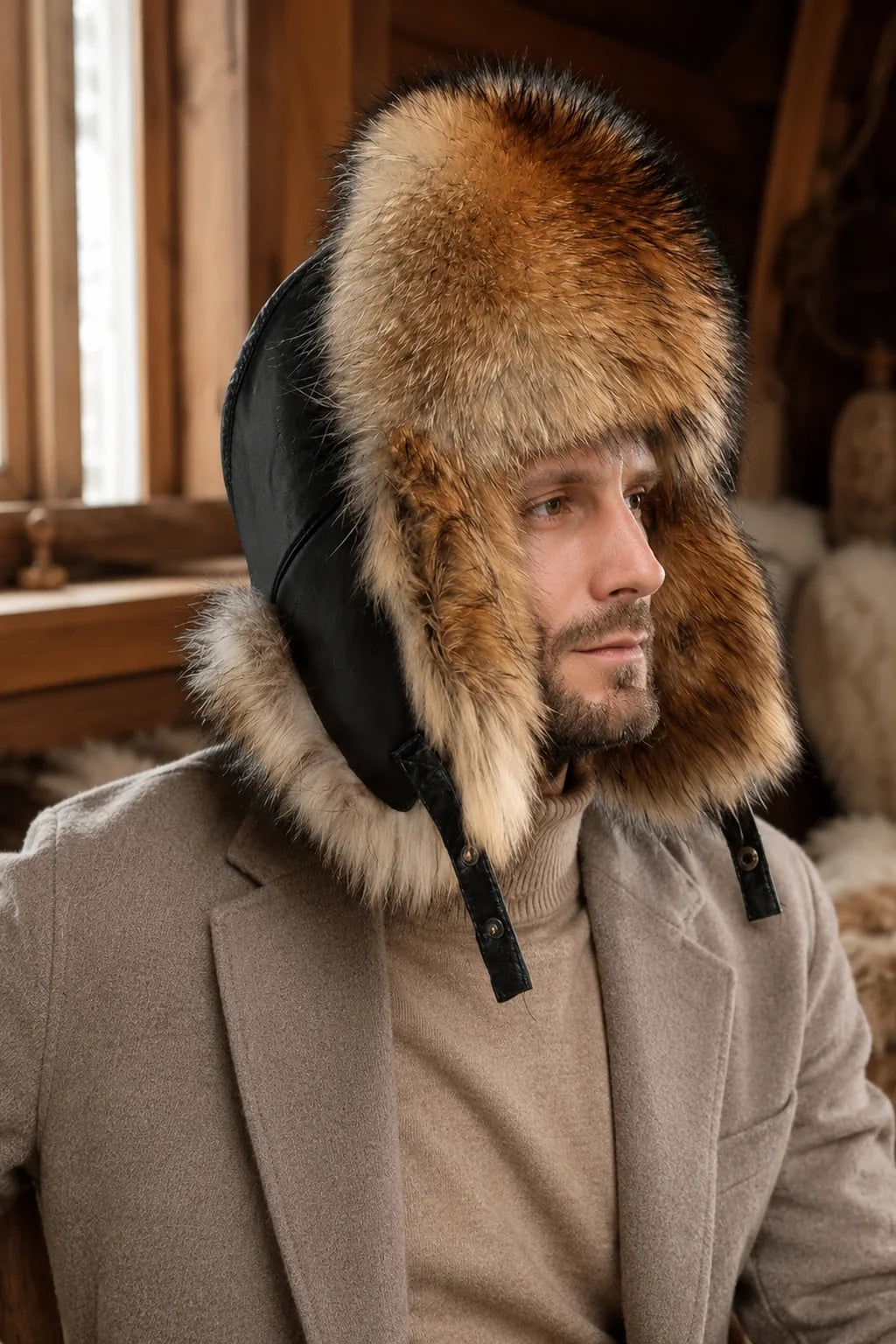
Choose a fur trapper hat by checking the crown fit, the position of the earflaps and the way the hat meets your coat collar. Confirm which parts contain fur, what the crown and lining are made from and how any ties or fastenings are intended to work. Do not choose from the name alone: similar silhouettes can have different materials, fit ranges and wearing arrangements. Try the complete winter outfit before deciding.
Begin with the coverage you want
The recognisable trapper outline can appeal for different reasons: ear coverage, a substantial winter silhouette or the way the flaps frame the face. Decide which matters most to you. If you mainly want a visual accent, your priorities may differ from someone choosing a hat for a long outdoor routine. Neither purpose should be hidden behind an unsupported temperature claim.
Write down the coat and hairstyle you expect to pair with the hat. A high collar, glasses and gathered hair can all affect the available space. This gives you a real fitting brief before you compare colours or species descriptions. The hat should work with the layers you already use, not require an entirely new outfit to feel comfortable.
Measure the head, then read the selected chart
Use a flexible tape at the intended wearing line and record the measurement with its unit. Follow any specific measuring instructions supplied for the hat. Compare the result with that product's guidance rather than a universal small, medium or one-size conversion. If the meaning of a dimension is unclear, ask what it measures.
A soft or adjustable-looking crown does not establish an unlimited fit range. Clarify which part adjusts and how. A tie associated with the earflaps may have a different purpose from an internal crown adjustment. Do not assume that tightening one feature will correct the fit of the whole hat.
Separate crown, earflaps and lining
Read the material description by component. The fur may be on the earflaps or trim, while the crown uses another material. The lining is another field again. A title that names a fur species does not automatically mean that every visible or hidden part contains that fur.
Ask for an inside view if the lining and adjustment are not shown. A clear image can help explain the construction, but it should support a written description rather than replace it. Do not infer a material from colour or texture alone. Similar-looking winter surfaces can be made differently and have different care directions.
Test the earflaps in their intended positions
Check how the maker intends the flaps to be worn. If the design provides more than one position, try each one that matters to your routine. Notice where the lower edges finish and whether they meet the coat collar or glasses. Do not force a fastening into a position not shown or described for the product.
Keep ties and other fastenings arranged as directed, without restricting normal movement. If a flap needs constant readjustment, identify whether the issue is length, crown position or contact with another layer. That specific observation is more useful than deciding that all trapper hats are too bulky or too loose.
Put the coat on before approving the fit
Close the coat and turn your head to each side. Look down comfortably and then return to an ordinary posture. Check whether the collar lifts the rear of the hat or pushes an earflap forward. If you use a scarf, add it to the test rather than assuming there will be room for it later.
You do not need to stack every winter accessory at once. A hat with substantial ear coverage may occupy space that an additional earmuff or bulky scarf also needs. Choose a combination that works as a whole. More layers in the same location do not automatically create a more comfortable arrangement.
Judge the silhouette in profile
Look at the hat from the side as well as the front. Crown depth and the projection of the flaps can change the outline significantly. A close-cropped product portrait may conceal that volume. Ask for an ordinary wearing view if the silhouette is important to you.
Treat styling preferences as preferences. You may enjoy a fuller outline with a simple coat or prefer a more contained shape with a large collar. There is no universal face-shape rule that can replace trying the actual dimensions. The best visual choice is one you enjoy without compromising movement or the intended fit.
Make room for ordinary handling
Practise taking the hat off and putting it on without pulling on decorative fur or a small attachment. Consider where it will rest when you go indoors. A larger winter shape may need more space in your bag than you first expect. If you commute between indoor and outdoor settings frequently, that transition is part of the decision.
Do not compress or fold the hat beyond what its maker allows simply to make it fit a pocket. If portability is essential, ask whether the construction is designed for the way you intend to carry it. A hat can be an excellent choice for one routine and inconvenient for another without either person being wrong.
Read claims with the right level of confidence
Words such as warm, winter and plush can describe a product's intended character without providing a tested temperature rating. If you need a specific protective function, seek appropriate product information. Do not infer waterproofing, a fixed lifespan or a particular sourcing certification from the silhouette or fur name.
Keep the care directions for the complete hat. Crown, lining, fur and fastenings may require consideration together. If the instructions are unclear, ask before treating it. A manufacturing process or care routine for another trapper hat is not automatically suitable for the one you choose.
Questions before ordering
Is a trapper hat the same as an ushanka?
The names can overlap in retail descriptions. Compare the actual crown, flaps and intended fastening arrangement instead of relying on the category name to settle every detail.
Can the ties correct a loose crown?
Do not assume so. Ask what the adjustment is designed to change and choose the crown fit using the product's own guidance.
Should I size up to wear it with a hood?
Do not apply a universal rule. Check whether the intended combination works and follow the fit advice for the exact hat and coat. A different pairing may be more suitable than altering the size to solve a layering problem.