Fur Cape, Shawl or Poncho? Compare Openings and Movement
Compare a fur cape, shawl and poncho by the actual opening, shoulder shape and arm movement rather than the retail name alone. A shawl is often arranged around the shoulders, a cape is shaped as an outer layer and a poncho commonly passes over the head, but product descriptions vary. Check the exact construction, fastening and dimensions with your outfit. Choose the piece that is comfortable to put on, wear, sit in and remove.
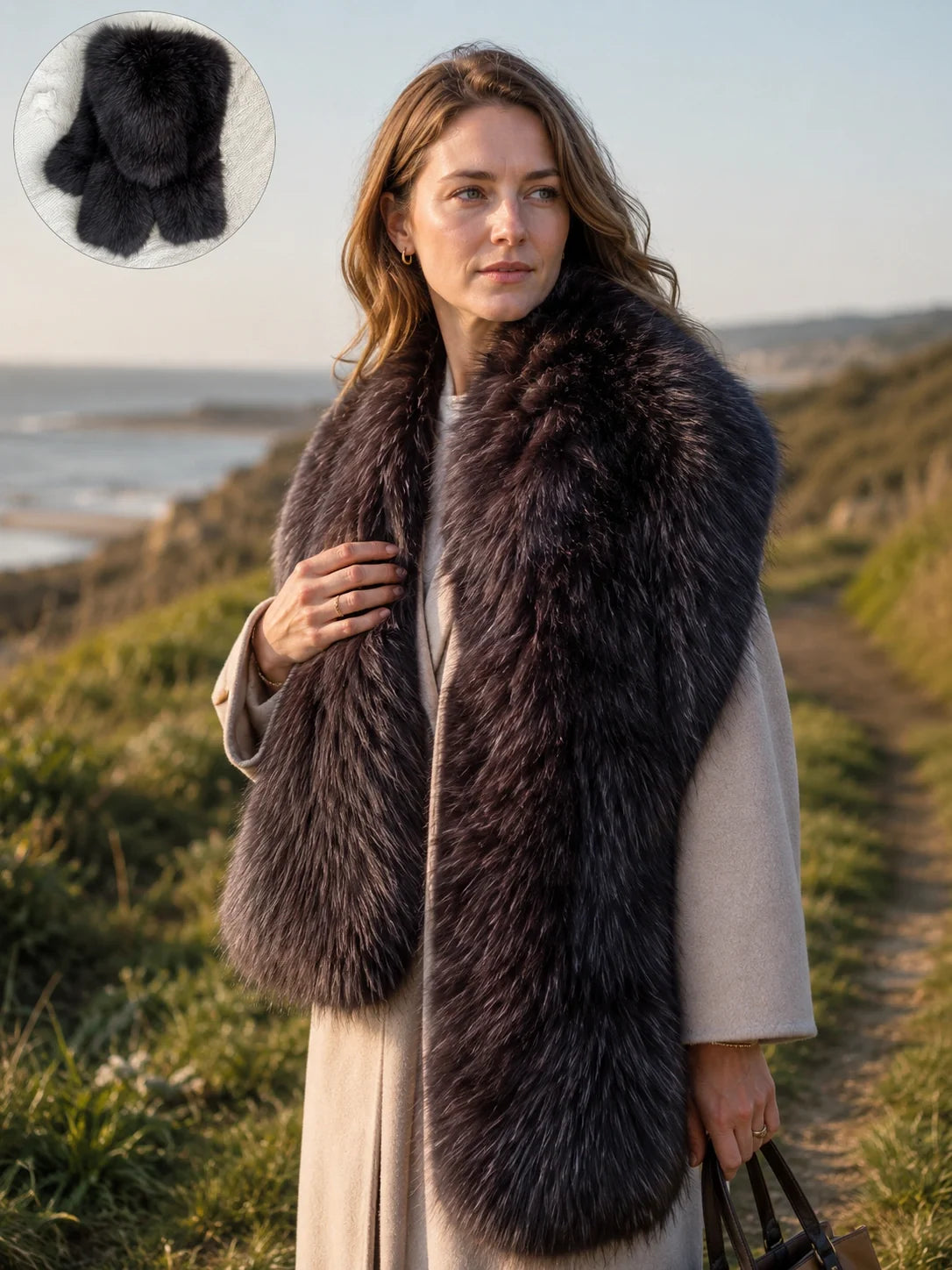
Compare a fur cape, shawl and poncho by the actual opening, shoulder shape and arm movement rather than the retail name alone. A shawl is often arranged around the shoulders, a cape is shaped as an outer layer and a poncho commonly passes over the head, but product descriptions vary. Check the exact construction, fastening and dimensions with your outfit. Choose the piece that is comfortable to put on, wear, sit in and remove.
Let the construction explain the name
Retail names can overlap, especially for smaller shoulder pieces. A cape scarf, wrap or capelet may combine features you associate with another category. Instead of deciding from the title, ask how the item opens and where the arms go. Those two questions quickly make the silhouette more understandable.
Look for a flat or open view alongside the wearing photographs. It should show whether the piece has a neck opening, an open front, a tie or another closure. If a model holds the fabric in position, ask whether that is a styling choice or necessary to maintain the arrangement. Do not invent a fastening that the product does not describe.
Consider a shawl as an arrangement to manage
For a shawl-style piece, look at how you will place the width across the shoulders and where the ends will rest. You may enjoy being able to change the drape, but that flexibility can also mean making small adjustments. Decide whether you want that freedom or prefer a more defined position during the outing.
Try holding your bag and reaching forward while wearing it as intended. If one hand is always needed to keep the piece in place, decide whether that suits the occasion. There is no requirement for every accessory to be completely hands-free, but you should know the trade-off before choosing it for a busy routine.
Consider a cape as a shaped layer
For a cape or capelet, examine the shoulder line, front opening and any arm access. The structure may give the piece a more defined outline, but it still needs to fit your shoulders and the clothing beneath it. A one-size label does not establish identical coverage for every person.
Check where the lower edge finishes when you sit. A cropped capelet and a longer cape can interact very differently with a chair, bag or coat underneath. Ask which measurements describe the relevant drop and width. Do not compare overall length figures from differently shaped products without understanding how each one is measured.
Consider a poncho’s entry and exit
For a pull-on poncho-style piece, check the neck opening and the intended way of putting it on. Try it with the hairstyle, glasses and clothing you plan to wear. Removing an over-head layer can be a more important question for an occasion outfit than it first appears in a still photograph.
Look at how the fabric falls around the arms and whether you can reach the bag or pocket you use most often. Do not force an opening wider or alter the neckline to make the entry easier without advice about the construction. If frequent removal is part of the day, an open-front alternative may be worth comparing.
Test the same four movements
With each candidate, lower your arms, reach forward, sit and remove the piece as intended. Keep the underlying outfit and bag consistent. This simple sequence highlights differences in coverage and handling without turning a fitting into a set of artificial poses. Notice where the accessory settles by itself and where you have to intervene.
Describe any difficulty precisely. The front ends meet my bag when seated is different from the shoulder line moves when I reach. One may call for a different length, the other for a different shape or closure. Choosing the opposite category name will not automatically resolve both problems.
Compare coverage without inventing a warmth ranking
Decide which parts of the outfit you want the piece to cover. Shoulders, upper arms and neckline can be addressed in different ways by different cuts. Use the actual dimensions and wearing views. More surface area does not, by itself, provide a supported temperature rating or establish suitability for every outdoor condition.
If you need a specific protective function, look for appropriate product information rather than relying on the words winter or warm. For a style-led occasion layer, focus on comfortable coverage and the transitions you expect during the event. A useful shoulder accent does not have to replace a full outdoor coat.
Read a capelet example accurately
Our fox fur lace-trim tie-front capelet is described as an open-front shoulder piece with tiered fur panels, lace trim and long front ties. It is intended to rest across the shoulders and cover the upper arms. The listing makes clear that drape varies with shoulder width and the layers beneath it.
Those details make it a capelet example, not proof of how every cape or poncho fits. Compare its stated dimensions and tie-front arrangement with your outfit. Do not infer a lining fibre from the lining's colour or assume that a one-size option guarantees a particular amount of coverage on you.
Choose the neckline and jewellery together
Try the piece with the dress or top neckline and the jewellery you intend to wear. A centre-front tie, pendant and ornate collar can all compete for the same space. Remove or reposition one and compare the result. A quieter arrangement can make the material more noticeable without requiring a larger accessory.
Check for contact when turning your head and moving your shoulders. Do not add a pin through the material simply to achieve a preferred outline unless that use is appropriate for the construction. The piece should support the outfit through its intended design, not through a series of improvised attachments.
Think beyond the first occasion
Consider where the layer would fit into the rest of your wardrobe. An open-front capelet might suit several necklines; a particular drape might be reserved for one favourite dress. Either can be a conscious choice. The useful question is whether you will enjoy the piece in its intended role, not whether it can be made to solve every dressing problem.
Keep the care directions and follow the recommended storage arrangement for its shape and components. If a fastening or lining needs attention, seek advice about the complete item. Do not treat production methods or a general fur-care tip as permission to alter its structure at home.
Common questions
Are cape and poncho interchangeable search terms?
They may overlap in listings, but the actual opening and cut should decide your comparison. Ask how the piece is put on and how the arms move.
Which is easiest to remove indoors?
That depends on the exact construction and your outfit. Test the intended removal sequence rather than assuming a category always wins.
Can I wear a shawl as a cape?
Only in arrangements appropriate to the piece. Do not add unsupported fastenings or alterations to force it into another construction. A different design may give the effect more comfortably.
Compare a relevant design

Women's Genuine Fox Fur Lace-Trim Tie-Front Capelet
Fox fur capelet with lace trim, tiered panels and front ties. Listed size: 145 × 40 cm; this is not a guaranteed body-fit range. Compare the drape with your outfit.
View the pictured option and its current details