Fur Accessories for a Theatre Evening: Dress, Sit and Store
For a theatre evening, plan fur accessories around three moments: arriving in outerwear, sitting comfortably and keeping removed pieces in a suitable place. Choose one detail that works with your neckline or hands, and check it beside jewelry, bag straps and closures.
By Capricornus Living · Updated October 9, 2026
For a theatre evening, plan fur accessories around three moments: arriving in outerwear, sitting comfortably and keeping removed pieces in a suitable place. Choose one detail that works with your neckline or hands, and check it beside jewelry, bag straps and closures. Confirm the venue’s actual arrangements if you expect to use a cloakroom. A polished outfit should still be easy to manage once the lights go down.
Fur accessories for a theatre evening: Dress for the seated evening as well as the arrival
A theatre outfit spends much of its time seated, so start there. Put on the clothes you intend to wear, sit in an ordinary chair and notice the neckline, sleeves and bag placement. Then add the accessory. This gives you a more useful basis for choosing than judging only the full-length standing view.
Decide which piece will come off with the coat and which, if any, you want to keep on indoors. A scarf may be an arrival detail rather than part of the seated outfit. Cuffs may remain visible after the outer layer is removed, but only if they are comfortable for the activities you expect during the evening.
The aim is not to predict the temperature or rules of an unfamiliar venue. It is to make the outfit adaptable. If you need specific information about a cloakroom, bag arrangements or dress expectations, check with that venue rather than assuming every theatre works the same way.
Choose one focal area near the face or hands
A scarf can frame the neckline; cuffs create a different emphasis at the sleeve. Decide which location adds more to the clothes you already chose. You may not need both. Keeping one clear focal area can make jewelry and other details easier to place, especially when the coat comes off.
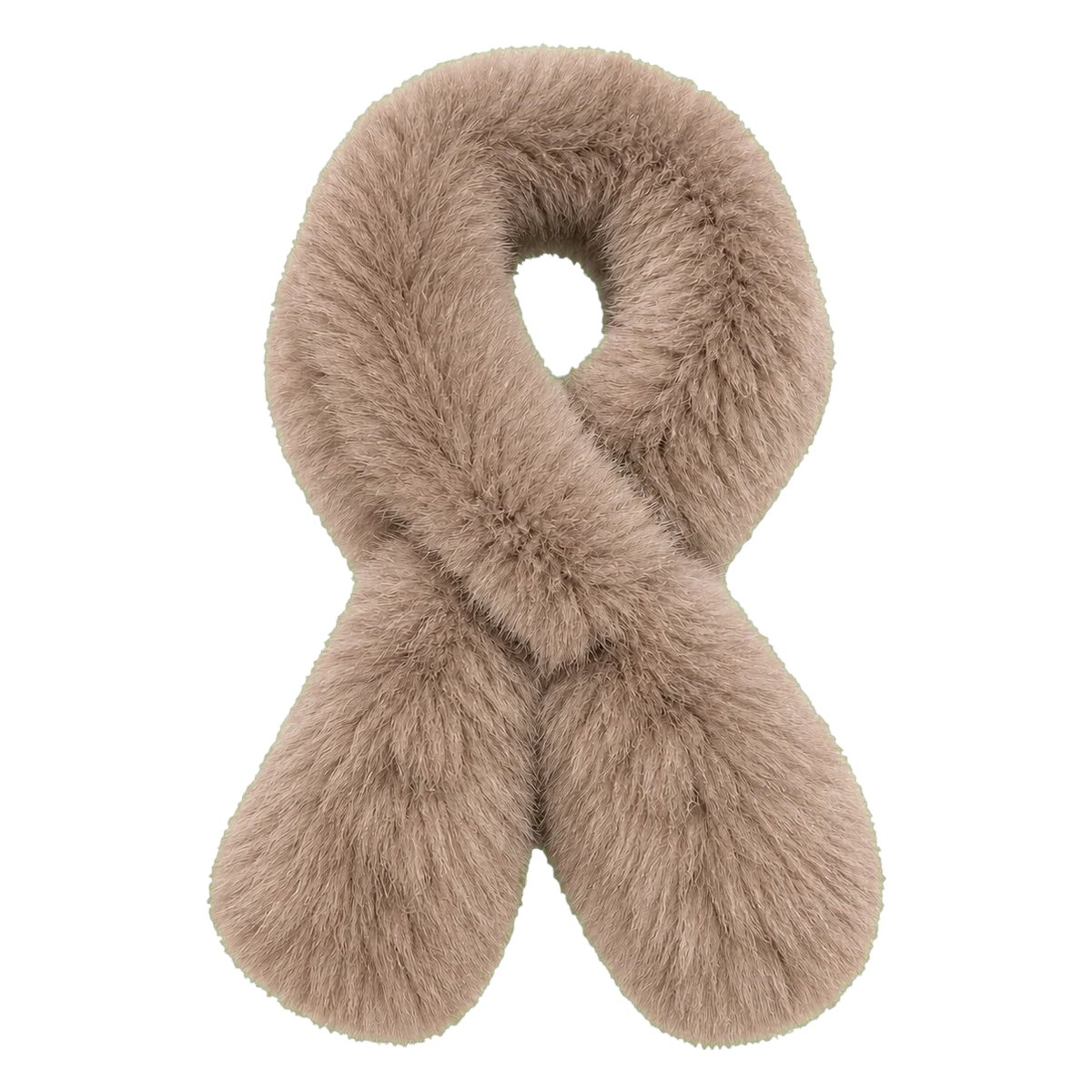
The pull-through fox scarf below is described as double-sided and has a loop for arranging its overlap. Try it with the actual coat and neckline. The listing does not provide exact dimensions for every possible drape, so do not assume a wrap style from another scarf will transfer directly to this one.
The fox cuffs have elastic openings and exposed fingers. Consider them as sleeve accents, not as full hand protection. Check the opening over the relevant sleeve gently. A dressier occasion does not make an uncertain fit more acceptable or justify stretching the cuff beyond what feels comfortable.
Check jewelry before leaving home
Put on earrings, necklaces and bracelets with the accessory and move as you normally would. Look down, turn your head and practice removing the coat. A dangling element may sit clear while you stand still but meet the fur during those movements. Change the pairing if you find repeated catching or awkward contact.
Keep a necklace away from the scarf’s loop and adjustment area. If it becomes hidden or difficult to manage, choose whether the scarf or necklace matters more to this outfit. You can also plan to reveal the jewelry after removing the scarf, provided the removal is straightforward and you have somewhere suitable for the accessory.
For cuffs, check bracelet clasps and charms near the opening. Do not use jewelry to hold the cuff in position or puncture a fur accessory with a decorative pin. A clear, comfortable arrangement is a better foundation for the evening than a fastening workaround you will have to monitor.
Make the coat transition uncomplicated
Practice taking the coat off with the bag and accessories you will carry. If the scarf comes off first, decide where you will put it while handling the coat. If cuffs remain on, check that the coat sleeves can move past them without pulling or catching. A calm rehearsal can reveal a problem before you are managing several belongings in a busy entrance.
Avoid bundling the accessory inside the coat without considering what is pressing on it. Follow the product’s directions to keep it uncrushed and away from unsuitable moisture or direct heat. A pocket is not automatically an appropriate resting place simply because the item can be pushed into it.
If a cloakroom is part of your plan, ask about its actual arrangements and decide whether you are comfortable with them. This article does not promise that a venue accepts a particular item, provides a particular kind of storage or takes responsibility for it. Make that decision using the venue’s current information.
Choose a manageable bag arrangement
Think about the belongings you actually need for the evening before choosing the smallest possible bag. Include the phone with its case, any essentials and the way you will access tickets or confirmations. A bag that looks elegant but requires you to carry necessary items separately may not simplify the outfit at all.
Keep bag straps and hardware away from the scarf’s surface as far as the arrangement allows. Check the contact when the bag is worn and when it rests beside you. Do not turn the scarf into padding or attach it to a decorative strap as an improvised carrying method. Use each piece according to its intended construction.
If you remove the accessory, keep it separate from food, drinks and loose cosmetics. A clean, dry place that does not crush it is more useful than squeezing it into a crowded bag at the last minute. When no practical arrangement is available, choosing a simpler outfit may be the most comfortable option.
Keep sleeves comfortable while seated
Sit with your forearms in a natural position and notice where the cuffs rest. Check that they do not need constant rearranging when you hold a program, open the bag or bring your hands together. This is a personal comfort check, not a claim that a particular product suits every seat or every evening activity.
If the sleeve itself is full or heavily decorated, adding a cuff may create more detail than you want. Try the outfit without it and compare. The same accessory may work better with a plainer sleeve on another occasion. There is no need to make one piece fit every garment in order for it to be a worthwhile choice.
Keep removal simple if you decide not to wear the cuffs indoors. Do not leave them where they can fall, be sat on or be pressed beneath other belongings. Planning this small step before the evening makes it easier to enjoy the outfit without repeatedly checking where everything has gone.
Let the outfit feel considered without becoming a costume
Choose the level of contrast that suits your personal style. A textured accessory with a simple dress or separates can feel intentional; a more layered outfit may also work if you enjoy it. These are styling possibilities rather than rules about what theatre clothing must look like. The venue and occasion may influence your choice, but your comfort still matters.
Use color to connect or contrast with the clothes you own. Check the selected product images without assuming exact screen matching. Jewelry and hardware do not all need to be identical in tone. If the outfit feels crowded, remove one element before adding another in an effort to make it feel complete.
Avoid buying an accessory solely for the standing arrival photograph if you dislike managing it through the rest of the evening. A piece that feels natural during the practical parts of the outing is more likely to become something you wear again.
End the evening with the same care you began it
When you get home, separate the accessory from the coat and bag before setting everything down. Check for dampness, marks or a snag you noticed during the evening. Follow the exact product directions rather than applying a household treatment while tired. Significant contamination or damage deserves suitable professional advice.
Keep the accessory in a clean, dry, uncrushed resting place away from direct heat. Do not leave it in a tightly packed evening bag until the next occasion. An uncomplicated return-home routine helps preserve the usefulness of a special-event piece without requiring an elaborate ritual.
Compare the scarf and cuffs in the accessories collection as alternative focal points. Choose the piece that works for arrival, seating and removal. The most successful evening detail is one you can enjoy wearing while still giving your attention to the performance.
Common questions
Should I keep a fur scarf on during the performance?
That is a comfort and outfit decision, subject to the venue’s actual expectations. Plan a suitable place for it if you choose to remove it.
Can I assume the theatre cloakroom will store my accessory?
No. Check the venue’s current arrangements and terms before relying on that option.
Compare the featured accessory formats

Double-Sided Genuine Fox Fur Scarf - Thick Pull-Through Neck Warmer
A double-sided fox-fur scarf with a pull-through loop. Compare its placement with your actual neckline and coat; adjustable overlap is not a verified numerical fit range.

Genuine Fox Fur Wrist Cuffs - Elastic Winter Sleeve Warmers
A pair of fox-fur cuffs with elastic openings for a sleeve or wrist detail. Confirm compatibility with your wrist and clothing; the fingers remain uncovered.
Explore the related collection and check the selected option’s current details before ordering.
Sources and further reading
Product information checked October 9, 2026. Styling suggestions are editorial guidance, not a report of product testing. Follow the selected item’s care instructions.
- Double-Sided Genuine Fox Fur Scarf - Thick Pull-Through Neck Warmer
- Genuine Fox Fur Wrist Cuffs - Elastic Winter Sleeve Warmers
Continue with the related accessory guide · Explore our materials · Care and keeping