How to Measure Your Head for a Fur Hat That Fits
Measure around your head at the line where the hat will sit, using a flexible tape that rests comfortably without tightening it. Repeat the measurement and record the unit. Then compare it with the exact hat's size guidance, including any adjustment range. Circumference is only the start: check crown depth, ear coverage, hairstyle, glasses and coat clearance. Do not convert your number into a universal small, medium or one-size fit.
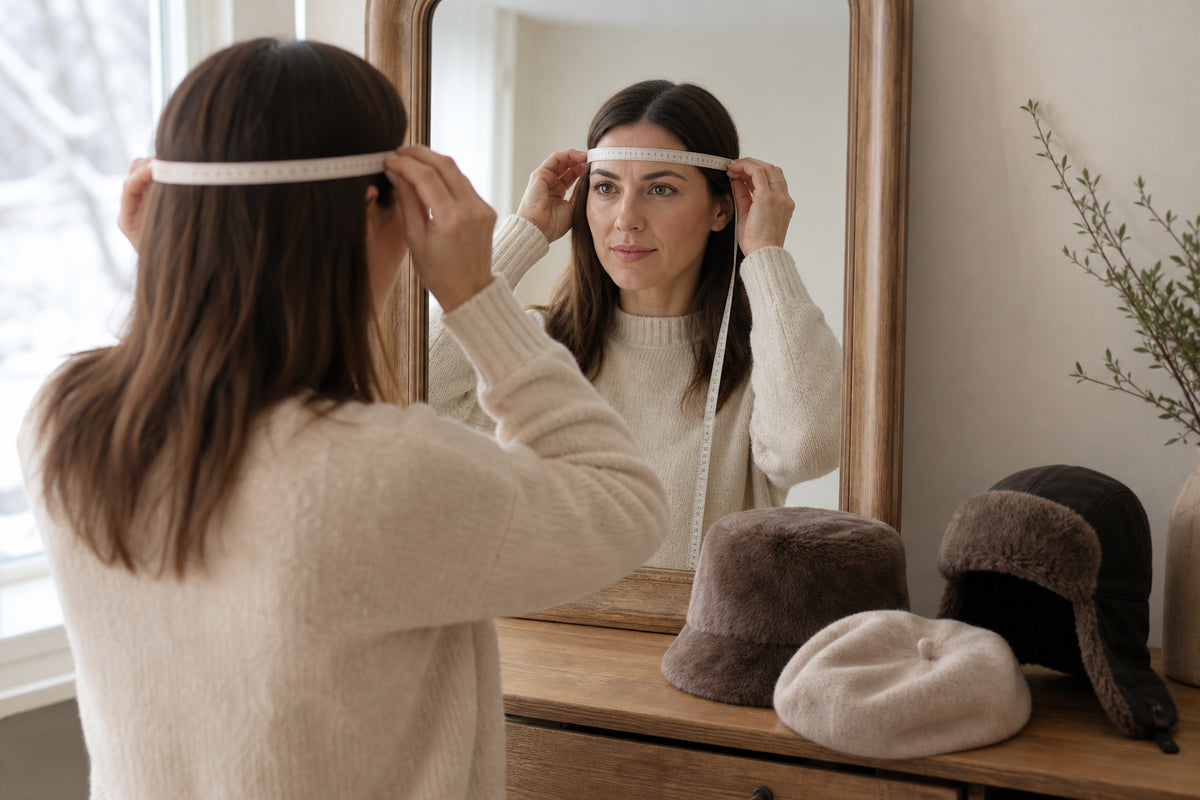
Measure around your head at the line where the hat will sit, using a flexible tape that rests comfortably without tightening it. Repeat the measurement and record the unit. Then compare it with the exact hat's size guidance, including any adjustment range. Circumference is only the start: check crown depth, ear coverage, hairstyle, glasses and coat clearance. Do not convert your number into a universal small, medium or one-size fit.
Prepare for the way you will actually wear the hat
Choose your ordinary winter hairstyle before measuring. A measurement taken with tightly flattened hair may not describe the way you wear a hat on a normal day. If you alternate between two noticeably different hairstyles, record that rather than expecting one number to explain both situations. The aim is useful information, not the smallest possible circumference.
Use a flexible measuring tape and a mirror, or ask someone to help keep the tape in position. Remove anything that would distort the path, such as an unrelated hair clip at the wearing line. Do not place the tape around the widest outer part of a hat you already own and treat that as your head measurement.
Find the wearing line
Hatmaker Stetson's size guidance places the tape where the hat will sit and advises a firm but comfortable hold. That is a useful measuring principle; Stetson's size chart is not a conversion chart for every Capricornus hat. For the item you are considering, use its own instructions if it specifies a particular measuring position.
Keep the tape level around the chosen line and check that it has not slipped down at the back. Read the number without pulling the tape tighter to hold it still. Repeat the process after removing the tape completely. If the readings differ, check the position and tension rather than averaging two measurements taken along different paths.
Record the number and the unit together
Write the measurement as a number with centimetres or inches, not just as medium. If you convert units, retain the original reading so you can compare accurately with the listing. A conversion error can matter more than a small difference in style. Avoid rounding simply to land inside a preferred size range.
Keep a short note of the hairstyle and wearing position. This is particularly useful if you are comparing a shallow crown with a deeper style. You are not creating a medical measurement or a perfect technical specification; you are giving yourself and the seller enough consistent information to discuss fit without guessing.
Understand the kind of size information offered
A fixed size, a stated head-circumference range and an adjustable design are different descriptions. Ask what a quoted dimension measures. It might refer to the intended head size, the inside opening of the hat or a flat measurement. Those figures should not be treated as interchangeable unless the seller explains the relationship.
One size is not a measurement. Stretch and adjustment also do not establish an unlimited fit range. If the listing does not provide enough information for your head measurement, ask about the selected option. A clear answer is more useful than deciding that a soft-looking crown will probably accommodate any head.
A product-specific size example
The Men’s Genuine Sheepskin Leather Earflap Cap lists S for 56–57 cm, M for 58–59 cm and L for 60–62 cm. These ranges belong to that cap, not to every hat in the collection. For example, a 57.5 cm reading sits between the listed S and M ranges: keep the original measurement and ask about this cap’s fit instead of rounding it to make it qualify. Check the selected size on the product page before ordering. An adjustable hat without a stated numerical range needs its own fit information.
Check depth as well as circumference
Two hats can have a similar opening while sitting differently on your head. Think about where the brim, crown edge or earflaps will finish. A hat that sits too low may interfere with glasses or your view; one that sits too high may not give the coverage you wanted. These are reasons to compare the whole shape, not simply the opening.
Ask for an ordinary side view if the product photograph hides the depth. At a fitting, let the hat settle in its intended position without pulling it down forcefully. Turn your head and look slightly up and down. Notice whether you keep adjusting the same edge. That repeated adjustment may tell you more than the still photograph you initially liked.
Bring the rest of the winter outfit into the test
Try the hat with the glasses, hood and coat collar you intend to wear. A large collar may meet a low rear brim; glasses arms may occupy the same space as an ear-covering section. Check those contacts before treating the hat as a complete solution for your routine.
If you intend to wear a hood over the hat, follow the garment's intended arrangement and make sure you can move and see normally. Do not assume that all winter layers are designed to stack. A hat can fit on its own and still be awkward with one particular coat, which is a wardrobe compatibility issue rather than necessarily a sizing error.
What to do between sizes
Do not follow a universal rule to size up or down across all fur hats. Ask the maker how its particular construction should fit and what the adjustment can realistically change. Crown structure, lining and intended wearing position can alter the answer. Guidance from another brand may explain its own hats without applying to yours.
Avoid buying a painful fit on the assumption that the hat will stretch to the desired size. Likewise, do not assume that an oversized opening can be corrected by improvised padding or alteration. Discuss the exact item first, and check the applicable return conditions before ordering if the choice remains uncertain.
Inspect the fit on arrival
Compare the delivered size and option with your order before removing labels or attempting adjustments beyond those provided. Put it on gently with the intended outfit. Check the wearing line, ear coverage and ordinary head movement. The hat should not require force to reach the position shown in its instructions.
If the result differs from what you expected, photograph the overall fit and describe the specific issue. For example, the rear edge meets my coat collar is clearer than it feels wrong. Keep the measurement record so that the seller can distinguish a sizing question from a shape or styling question.
Frequently asked questions
Can I measure with string?
If necessary, use a non-stretching length and measure it against a ruler, taking care not to change the length or position. A flexible tape is simpler when available.
Does my usual clothing size help?
Not reliably. Use your head measurement and the hat's own fit guidance rather than a clothing size or another brand's label.
Is a tighter hat always more secure?
No. Comfort, intended fit and design all matter. Do not accept painful pressure or obstructed vision as the price of keeping a hat in place.